Frequently asked questions
Where do you get your ideas from?
Ideas for me are like those little gray dots in your eye called floaters. You can’t control them, they just drift in and out of your awareness.
As I mentioned on my home page, three of my books (Thank You, Lord, for Everything, God Is Watching Over You, and All God’s Critters Sing Allelu) were inspired by a friend wanting fun, Sandra Boyton-like books with takeaway value for her daughter.
Many of my manuscripts are inspired by the humorous juxtaposition of two opposing ideas: a sloth who dreams of being a hero, a grownup kids get to hush, a baby who needs noise in order to sleep. I attribute these connections to my ADHD, because thoughts ricochet around my brain like thousands of superballs.
Why do you write for children?
In 1990 I was reading Tomi dePaola’s Book of Bible Stories when suddenly I knew, right down to my soul, that God wanted me to be a children’s book author and illustrator. It made total sense: the two things I love doing most are making art and writing.
I am blessed to still remember what I thought, felt, and did when I was four years old. These memories are more vivid than memories from any other age I’ve been. Also, I tend to think in images rather than words, which is a natural starting point for picture books.
The people who ask me this question are always adults and the second half of the question is usually “and not real books.” If by real books they mean books with lots of words, I have written two completed novels, one for kids 9-12 years old and one for young teens.
How long does it take you to write a picture book?
It can take anywhere from ten hours to ten years.
People often think that since picture books have so few words, so they must be quick and easy to write. But to tell a complete story with beginning, middle, end, plot, and engaging characters in fewer than fun 400 words is an immense challenge! And good picture book texts leave room for the illustrations to tell half the story.
It can take me up to fifty text revisions, examining each word under a microscope, and as many as twenty dummies (tiny rough sketches of each page in the entire book) until the words, images, and page turns produce an intellectually and emotionally satisfying “just right.”
There is a huge difference between completing a mansucript and getting it published. The six-month old girl I wrote three books for was in high school by the time they got published.
I’ve just written a children’s book. How do I find an illustrator and get it published?
Congratulations! Enjoy the satisfaction of having created something.
First the good news: you don’t need to find an illustrator. The publisher will do that. Submitting illustrations with your text could cause your lovely words to be disregarded if the editor doesn’t care for the art.
The bad news? Getting a book published involves lots hard work and tons of luck. There are many dos and don’ts to learn about the submission process in order to give your manuscript its best chance. Submitting before knowing what’s expected is a waste of time and effort.
Your first step is to get educated. I learned all about the submission process by attending both local and national conferences organized by the Society of Children’s Book Writers and Illustrators SCBWI—https://www.scbwi.org. And while I have an MFA in Writing for Children and Young adults, I still found the classes I took from the Children’s Book Academy to be chock-full of great information and personal attention. https://childrensbookacademy.com.
Good luck!
If it’s so hard to get published, why don’t you self publish?
If all you want is a few copies of your story for your family and friends, self publishing is a good option. Research Print on Demand (POD) companies.
Selling your books to people outside of your immediate circle works best if you already have a platform or your book will appeal to specific interest groups. You’ll also find you spend as much, if not more, time on marketing as on creating product, which is why I choose to stick with traditional publishers
What are your hobbies?
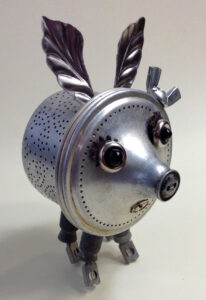
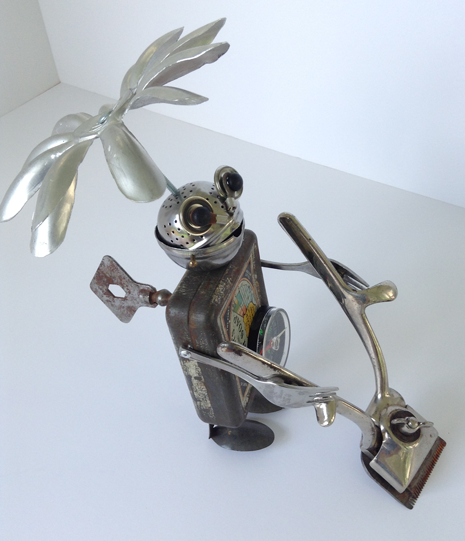
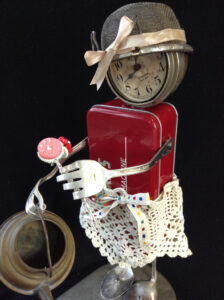
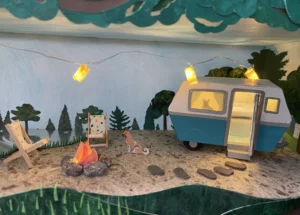
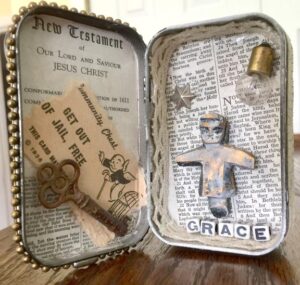
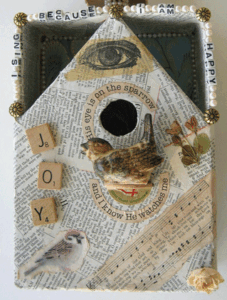
The tagline on my email is “Constantly Creating,” which is absolutely true. Most people create when they have nothing better to do. I create because I can’t stop myself. I suspect this compulsion is rooted in my ADHD. When I’m not writing or trying to illustrate, my creations include sculpture, jewelry, crochet, weaving, and major messes.
My favorite sport is swinging in my hammock chair, I’m an expert gluten-free baker, and both my dog and I experience withdrawal symptoms if we are more than five feet apart.
Fun stuff I've made